

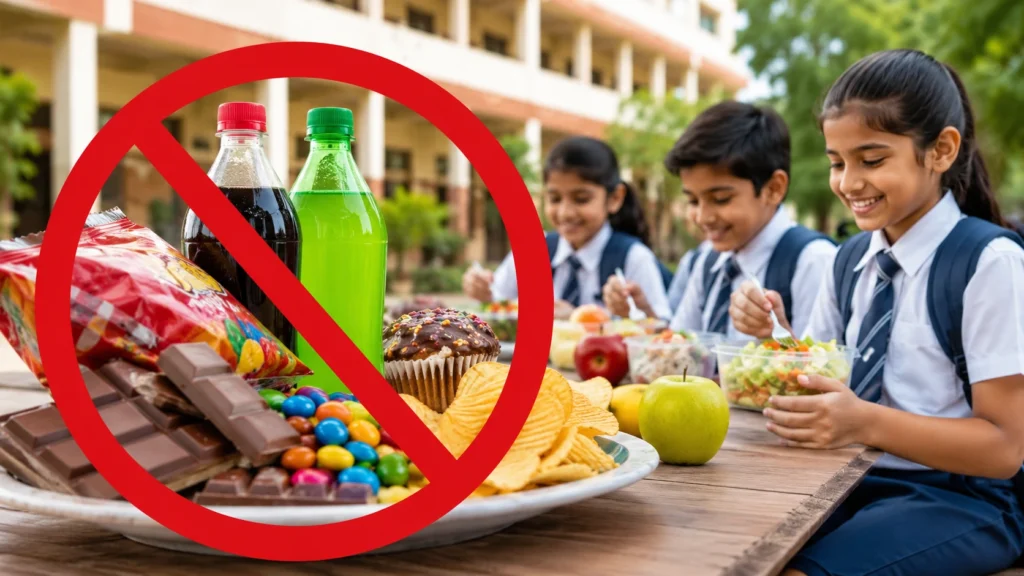

The Maharashtra government has taken a big step to improve children’s health. The state’s Food and Drug Administration (FDA) has banned the sale and promotion of junk food in schools and within a 50-metre radius of school campuses.
The move aims to reduce children’s intake of foods high in fat, sugar, and salt (HFSS). Health experts say these foods increase the risk of obesity, diabetes, and other lifestyle diseases.
Junk Food No Longer Allowed
The new order covers many popular snacks and drinks. These include:
- Chocolates
- Chips and wafers
- Soft drinks
- Sugary beverages
- Ice creams
- Fried snacks
- Other processed foods high in fat, sugar, and salt
The ban applies to school canteens and nearby shops. Vendors are also not allowed to advertise or promote these products near schools.
Why the Ban Matters
Many students buy junk food during lunch breaks. Eating these foods regularly can harm their health.
Doctors say too much junk food can lead to:
- Childhood obesity
- Type 2 diabetes
- High blood pressure
- Tooth decay
- Poor nutrition
Healthy food also helps children stay active and focus better in class.
Based on National Guidelines
The order was issued by FDA Commissioner Tukaram Mundhe. It follows the Food Safety and Standards Authority of India (FSSAI) school nutrition rules.
The goal is to create a healthier food environment for students. Schools are expected to support healthy eating habits instead of encouraging processed foods.
Healthy Options for Students
Schools have been asked to offer nutritious food instead of junk food.
Better choices include:
- Fresh fruits
- Sprouts
- Milk and dairy products
- Whole-grain snacks
- Freshly cooked meals
- Healthy drinks
Schools are also encouraged to teach students about balanced diets.
Strict Monitoring
The FDA has said the rules will be enforced strictly. School authorities, canteen operators, and nearby vendors must follow the order.
Officials may conduct regular inspections. Action can be taken if banned food items are sold in restricted areas.
A Healthier Future
Many parents and health experts have welcomed the decision. They believe it will help children develop better eating habits from a young age.
The success of the policy will depend on proper implementation. If followed well, it could improve student health and inspire similar steps in other states.
See more: Assam MLAs Unite to Donate One Month’s Salary for Flood Relief
Follow us: bh24newsweb