

For 66 families in Maharashtra, the wait for a phone call has become a painful race against uncertainty. Their relatives had travelled to Nepal on a pilgrimage to Kailash Mansarovar, but a devastating flash flood near the Nepal-China border swept through the area before the group could continue its journey. Nearly three days later, there is still no confirmed information about their whereabouts.
The missing travellers were part of a Hills and Trails group led by Dr Milind Chitaley. The group was travelling in three buses operated by Nepal-based Richa Tours and Travels. Each bus carried 22 people, making a total of 66 pilgrims now untraced.
The group had reached the Timure area in Nepal’s Rasuwa district on Wednesday morning. They had completed immigration formalities at around 8:45 am and were waiting for the Chinese side of the border to open so they could continue towards Kerung, located roughly 35 km ahead.
They never got the chance.
A Pilgrimage Turns Into a Nightmare
The pilgrims were only minutes away from beginning the next part of their journey when floodwaters and debris suddenly tore through Timure.
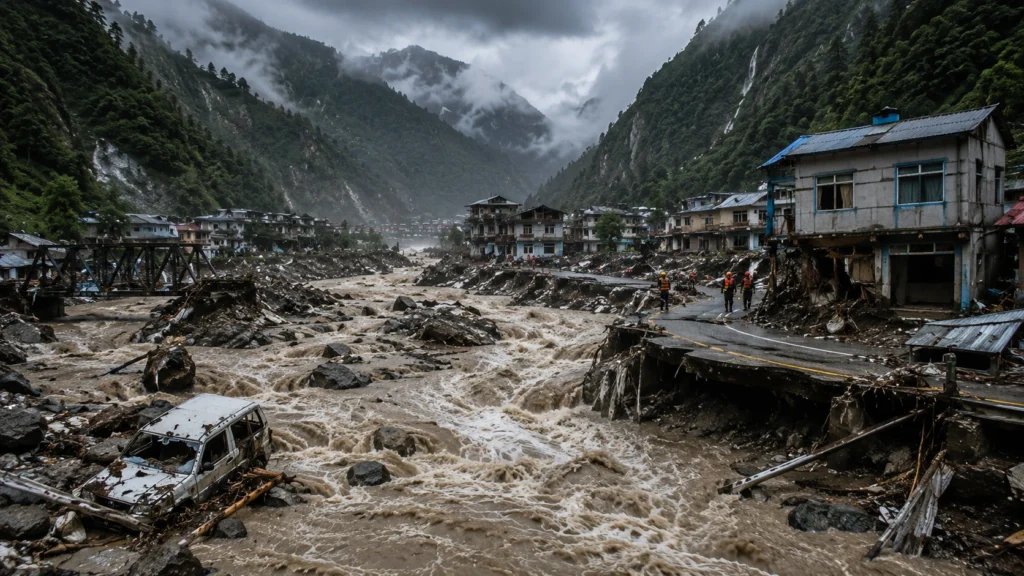
The flash flood destroyed the immigration centre and surrounding infrastructure, including roads and bridges. Vehicles, buildings and other structures in the area were overwhelmed by the force of the water and debris.
The disaster has since left large parts of the border region difficult to access. Communication networks and transport links were also badly affected, making it extremely difficult for authorities and families to establish contact with everyone who was in the area.
For relatives in Mumbai, Thane, Nagpur and Pune, the lack of information has become the hardest part of the tragedy.
Phones Have Gone Silent
Families have been desperately trying to find out whether their relatives were evacuated, moved to another location or remain trapped somewhere in the affected region.
But the destruction of communication and transportation infrastructure has made the search complicated.
In disasters of this scale, even confirming who has been rescued can take time. People may be shifted between temporary shelters or medical facilities, while damaged networks can prevent them from contacting their families.
That uncertainty has left relatives relying on government agencies, travel operators and other travellers for updates.
The Wider Disaster Is Massive
The missing Maharashtra pilgrims are part of a much larger humanitarian crisis unfolding along the Nepal-China border.
The August 26 flash flood devastated parts of Nepal’s Rasuwa district and adjoining areas of Tibet. A sudden surge of water, mud, rocks and debris swept through valleys, destroying settlements and critical infrastructure.
By Saturday, the overall death toll from the Nepal-China disaster had risen above 600, while thousands of people were still reported missing. Rescue teams continued working in difficult conditions, with helicopters being used to reach isolated communities and evacuate survivors.
Among those missing are hundreds of foreign nationals, many of whom were travelling in the region for pilgrimage or tourism.
Rescue Teams Face Dangerous Conditions
Finding the missing pilgrims is not simply a matter of reaching one location.
The flood has dramatically changed the landscape. Roads have disappeared under mud, bridges have been washed away and entire sections of the river valley have been covered by debris.
Rescuers also have to consider the possibility of additional flooding. Water bodies formed or affected by landslides and glacial activity have created fresh risks in the mountains.
Authorities are therefore balancing two priorities: searching for missing people and ensuring that rescue personnel do not become victims themselves.
Poor weather has added another layer of difficulty. Nepal has been seeking technical assistance for specialised rescue requirements, including difficult tunnel operations and other recovery work.
Relief for Some, Anxiety for Others
Amid the tragedy, there have also been reports of Maharashtra pilgrims being evacuated from flood-affected areas.
A separate group of around 100 Maharashtra pilgrims stranded in Kathmandu was safely moved out with assistance from Bihar authorities and arrangements were made for their onward journey home.
Such developments have offered some relief to families whose relatives have been located.
But for the families of the 66 pilgrims who remain untraced, the wait continues.
Hope Still Remains
For now, there is no confirmed information establishing the fate of the 66 members of the Hills and Trails group.
Their families are holding on to the possibility that some may have survived and been cut off from communication because of the destruction around them.
The search operation is continuing as authorities work through one of the most challenging disasters to hit the Himalayan border region in years.
For the families back in Maharashtra, however, the numbers and statistics mean little. They are waiting for individual names, familiar voices and one simple confirmation—that their loved ones are alive.
Until that information arrives, the uncertainty surrounding the 66 pilgrims will remain one of the most painful human stories emerging from the Nepal floods.
See more: PM Modi’s Central Asia Visit