
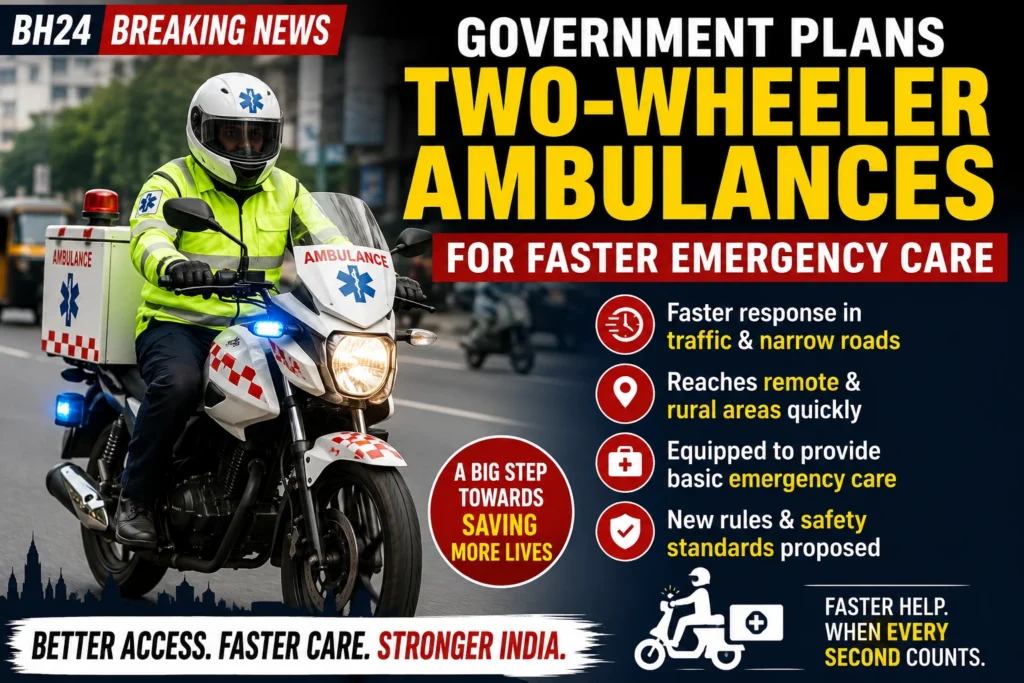

The Central Government has proposed a new framework to introduce two-wheeler ambulances across India. The move aims to improve emergency medical response in rural areas, hilly regions and cities with heavy traffic.
The Ministry of Road Transport and Highways has released a draft notification to create a separate category for two-wheeler road ambulances under the Central Motor Vehicles Rules, 1989.
Why Two-Wheeler Ambulances Are Needed
Traditional ambulances often struggle to reach patients quickly because of traffic congestion, narrow roads or difficult terrain.
Two-wheeler ambulances can travel faster through busy streets and reach remote villages where larger vehicles face delays. The government believes this can improve the “golden hour” response during medical emergencies.
What the Proposal Says
The draft rules propose a dedicated regulatory framework for these vehicles. They will have to meet new construction, safety and patient-handling standards under the Automotive Industry Standard AIS-209 (Part 1):2026.
The proposal also says these ambulances will be treated as transport vehicles. They will require regular fitness inspections and certification every two years.
Where Will They Be Used?
According to the proposal, state governments will decide where two-wheeler ambulances can operate.
They are expected to be most useful in:
- Rural villages
- Hilly and mountainous regions
- Areas with poor road connectivity
- Crowded cities with heavy traffic
The vehicles are designed to improve last-mile healthcare access and reduce the time taken to reach patients.
When Will the Rules Take Effect?
If approved, newly manufactured L2-category two-wheeler ambulances will have to comply with the new standards from October 1, 2027. The draft notification is currently open as part of the rule-making process before final implementation.
Why This Matters
Every minute is critical during a medical emergency. Faster access to patients can improve survival chances, especially in accident cases and medical emergencies.
If implemented successfully, two-wheeler ambulances could become an important addition to India’s emergency healthcare network, particularly in places where conventional ambulances cannot reach quickly.
Also Read: IIT Patna Student Moves Supreme Court Over NEET Protest