

BH24 Breaking News | August 2, 2026
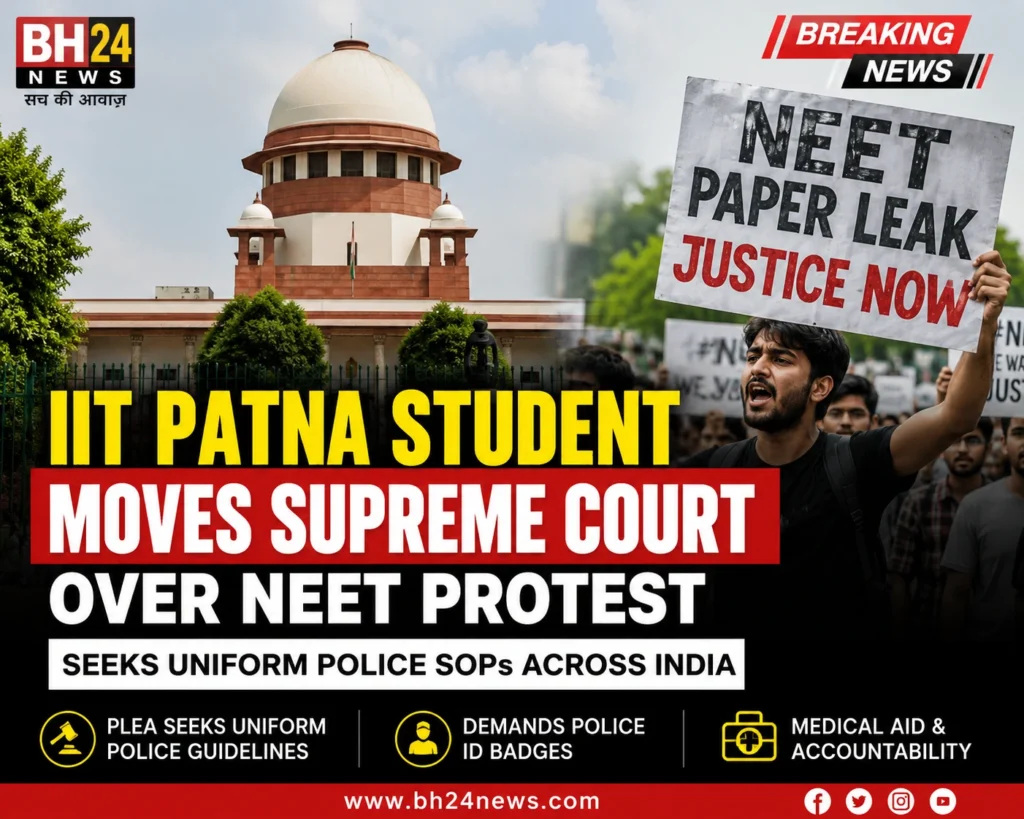
An IIT Patna student has approached the Supreme Court after alleging he was injured during police action at the ‘Sansad Chalo’ protest over the alleged NEET-UG paper leak in New Delhi. However, the plea is not just about one student. It seeks nationwide rules for how police should handle public protests, a move that could influence future demonstrations across India.
The student, Toshiwa Yadav, has filed an intervention application asking the apex court to bring greater transparency and accountability to police action during protests. The plea says peaceful protesters should be protected through clear and uniform guidelines instead of different practices followed by different states.
A Plea That Goes Beyond the NEET Protest
The case stems from the July 20 ‘Sansad Chalo’ protest in Delhi. Students and youth groups had gathered to demand action over the alleged irregularities in the NEET-UG examination. During the protest, Yadav claims he suffered injuries in police action. He has now taken the matter to the Supreme Court, seeking reforms that could benefit every citizen participating in peaceful demonstrations.
According to the petition, India needs a uniform Standard Operating Procedure (SOP) for police handling protests. It also calls for mandatory name badges for police personnel, proper medical care for injured protesters, and stronger accountability during crowd-control operations.
Why This Case Is Important
The petition raises a question that goes beyond the NEET controversy. Should there be one national framework for policing public protests?
At present, policing is largely a state subject, and crowd-control practices differ across the country. The petitioner argues that common guidelines would help protect citizens’ rights while allowing police to maintain law and order effectively. Legal experts say the case could trigger a wider discussion on transparency, accountability, and the right to peaceful assembly.
What Happens Next In The IIT Patna Student Supreme Court Case
The Supreme Court is expected to consider the intervention application along with related matters arising from the NEET protest. The court has not yet expressed any view on the merits of the plea.
For now, the case has shifted attention from a single protest to a broader debate on how police should manage public demonstrations in a democratic country. Any future direction from the Supreme Court could have implications for protest policing across India.
Also Read: Delhi Police Seek Death Penalty for Tahir Hussain in Ankit Sharma Murder Case