

New Delhi is witnessing an unusual mix of high-level diplomacy, heightened security and intense aviation planning as India hosts the 2026 BRICS Summit. While leaders from major emerging economies gather to discuss global politics and economic cooperation, authorities in Delhi are managing another major challenge behind the scenes — handling dozens of special aircraft without bringing regular air traffic to a standstill.
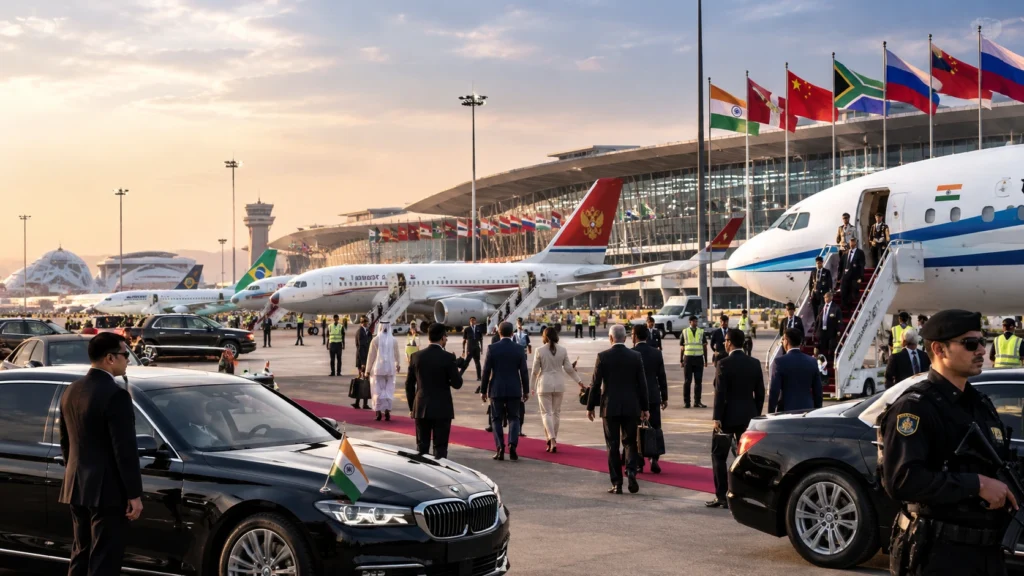
Around 35 special aircraft carrying heads of state, senior leaders and foreign delegations are expected to be handled during the summit. The operation involves multiple airports, controlled airspace and carefully timed movements designed to keep VVIP travel separate from normal passenger operations.
At the diplomatic level, the summit has already produced an important development. BRICS negotiators have reportedly reached an agreement on a joint declaration ahead of the leaders’ meeting. The document is expected to avoid directly naming any country while condemning unilateral warfare. Leaders are expected to formally consider the declaration during the summit.
A difficult diplomatic equation
The agreement comes at a time when BRICS is dealing with serious differences among its members.
One of the biggest challenges has been the widening divide between Iran and the United Arab Emirates over the ongoing conflict in the Gulf. Their opposing positions had already created problems during the BRICS foreign ministers’ meeting in New Delhi in May, when the group failed to produce a joint statement.
The latest agreement therefore carries importance beyond the wording of the declaration. It gives the grouping an opportunity to present a united position despite sharp differences among its members.
BRICS has also been seeking a bigger role in global decision-making. The group wants reforms in institutions such as the International Monetary Fund, World Bank and World Trade Organization, arguing that emerging economies deserve greater representation.
Delhi’s aviation challenge
While diplomats negotiate inside the summit rooms, aviation authorities have been working on an equally complicated schedule outside them.
The arrival of approximately 35 special aircraft requires coordination between the Indira Gandhi International Airport, the Indian Air Force’s Palam technical area and other airports being used for aircraft parking. Security agencies, the Air Force, airport authorities and the CISF are working together to manage these movements.
The special arrangements are designed to ensure that VVIP aircraft can arrive and depart without creating major disruptions for ordinary passengers.
Authorities have also placed temporary restrictions on non-scheduled flights within a 300-kilometre radius of Delhi between September 11 and 13. The restrictions apply during specified hours, while regular scheduled commercial flights remain exempt. Approved aircraft carrying summit dignitaries are also allowed to operate with the required clearances.
Several airports are being used as part of the wider aircraft-management plan, including Noida International Airport and Hindon, while other facilities have also been considered for parking visiting aircraft.
The planning goes beyond simply finding parking spaces for aircraft. Special movements have to be fitted around regular airline schedules, security requirements and VVIP road convoys.
India walks a diplomatic tightrope
For India, hosting the summit is also a test of its ability to maintain relationships with countries that do not always agree with one another.
Prime Minister Narendra Modi has been engaging with several key leaders ahead of the summit. His meeting with Iranian President Masoud Pezeshkian focused, among other issues, on the safety of maritime routes, commercial shipping and seafarers. India has been particularly concerned about disruptions to regional sea lanes because of the wider conflict.
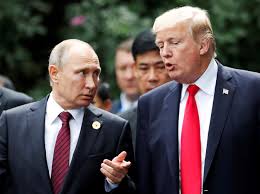
Modi also held talks with Russian President Vladimir Putin, with both sides discussing bilateral relations, trade, energy and the impact of international conflicts on commerce. Russia has pushed for BRICS to become a more practical economic platform covering areas such as technology, infrastructure, investment and payment systems.
China’s President Xi Jinping is also in New Delhi for the summit, marking his first visit to India in seven years. His presence has added another important dimension to the gathering, particularly as New Delhi and Beijing continue their cautious diplomatic thaw after years of tensions.
More than just a summit
The BRICS meeting is therefore unfolding on two different levels.
Inside the conference rooms, leaders are attempting to find common ground on war, global trade, economic governance and the future role of emerging economies.
Outside, Delhi is running a complex logistical operation involving airports, airspace, security forces, traffic arrangements and diplomatic convoys.
The joint declaration will be closely watched because reaching consensus itself has become a challenge for the expanded BRICS grouping. At the same time, the smooth handling of the visiting aircraft and VVIP movements will demonstrate India’s ability to host a summit involving leaders with very different political and strategic interests.
For New Delhi, the BRICS Summit is not simply another international meeting. It is a demonstration of diplomatic balancing, logistical coordination and India’s growing role in global affairs.