

US Keeps Up Military Pressure on Iran
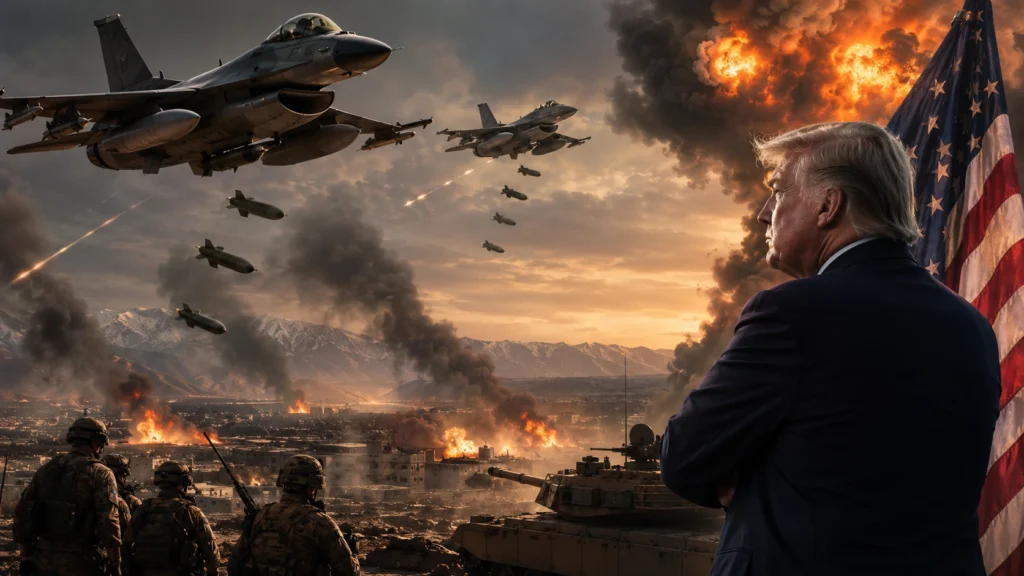
The United States has launched another series of airstrikes on Iran, showing no signs of slowing its military campaign. The latest operation was carried out just hours after President Donald Trump warned Tehran of a strong response to attacks that killed American soldiers.
US officials said this was the 10th night in a row that American forces had targeted Iranian military positions. The strikes focused on missile bases, drone launch sites, air defence systems and military command centres.
Washington said the mission was aimed at reducing Iran’s ability to launch future attacks against US forces and commercial ships in the Gulf.
Trump Says US Will Respond With Force
President Donald Trump made it clear that the United States would not ignore attacks on its troops.
Speaking after the latest operation, Trump said Iran had already paid a heavy price. He warned that any new attack on American soldiers would be met with even stronger action.
The warning follows the deaths of three US service members in recent attacks on American military facilities in the Middle East. Their deaths have increased pressure on the White House to take firm military action.
Iran Hits Back Across the Region
Iran quickly responded after the latest US strikes.
According to Iranian state media, missiles and drones were launched at American military facilities in Bahrain and Kuwait. Tehran also claimed responsibility for attacks on two oil tankers travelling through the Strait of Hormuz.
Iranian President Masoud Pezeshkian said the country was now facing a “full-scale war” with the United States.
Despite the growing conflict, Iranian officials said indirect communication with Washington has not stopped. Messages are still being exchanged through regional mediators.
Strait of Hormuz Becomes the Centre of the Crisis
The Strait of Hormuz has become one of the biggest flashpoints in the conflict.
This narrow waterway carries a large share of the world’s oil exports. Any military activity in the area can quickly affect global energy markets.
Iranian authorities said two oil tankers were damaged during the latest fighting. Rescue teams were sent to safely evacuate crew members.
Meanwhile, the United Kingdom Maritime Trade Operations (UKMTO) reported that another commercial tanker was struck by an unidentified object while crossing the strait. The crew abandoned the ship before emergency teams arrived.
Officials are still investigating whether both reports refer to the same incident.
The US military said commercial shipping continues, but security has been strengthened across the region.
Neighbouring Countries Feel the Impact
The conflict is spreading beyond Iran and the United States.
Jordan said its air defence systems intercepted several Iranian missiles after warning sirens sounded across the country.
Kuwait announced that its military successfully shot down Iranian drones before they reached their targets.
Bahrain also confirmed drone activity near its air navigation systems. However, officials said flights continued without interruption.
These incidents show that the fighting is now affecting several countries across the Gulf.
Diplomatic Channels Still Open
Even as military operations continue, efforts to reduce tensions have not completely ended.
Countries including Oman, Qatar and Egypt are reportedly helping both sides exchange messages in an attempt to avoid a larger regional war.
So far, these diplomatic efforts have not produced a ceasefire. However, officials believe keeping communication open could help prevent further escalation.
Global Markets on Alert
The ongoing conflict is being closely watched around the world.
The Strait of Hormuz is one of the most important oil routes on the planet. Any disruption could affect fuel supplies and increase crude oil prices.
Shipping companies are also reviewing security measures as attacks in the region become more frequent.
Economists warn that a prolonged conflict could affect global trade, energy prices and financial markets.
What Comes Next?
The latest developments suggest that both countries are preparing for a longer confrontation.
The United States says it will continue striking Iranian military targets if American personnel remain under threat.
Iran insists it will answer every attack with its own military response.
At the same time, both sides have left the door open for indirect diplomacy. Whether those talks can stop the violence remains uncertain.
For now, the Middle East remains on edge, with the world closely watching every move made by Washington and Tehran.
See more: India Pushes Back on Ex-Japanese Minister’s Comments About Bullet Train Delays