

New Delhi: India has firmly rejected remarks by a former Japanese minister who said the Mumbai–Ahmedabad High-Speed Rail (MAHSR) project has faced major delays. Government officials said the comments were inaccurate. They said the country’s first bullet train corridor is moving ahead, despite early setbacks.
The Mumbai–Ahmedabad High-Speed Rail project is one of India’s most closely watched infrastructure plans. It is backed by Japanese technical and financial support. The corridor is meant to change intercity travel by linking two major economic hubs with high-speed rail.
India Dismisses the Delay Claim
The issue began after the former Japanese minister reportedly said the project had fallen far behind schedule. India’s Ministry of External Affairs (MEA) said the statement did not match the real status of the project.
Officials said the project has made strong progress in recent years. They pointed to land acquisition, civil works, and bridge construction. The government said the work is moving in a planned and steady way.
India also said cooperation with Japan remains strong. It said both governments are committed to completing the project successfully.
A Major Example of India-Japan Partnership
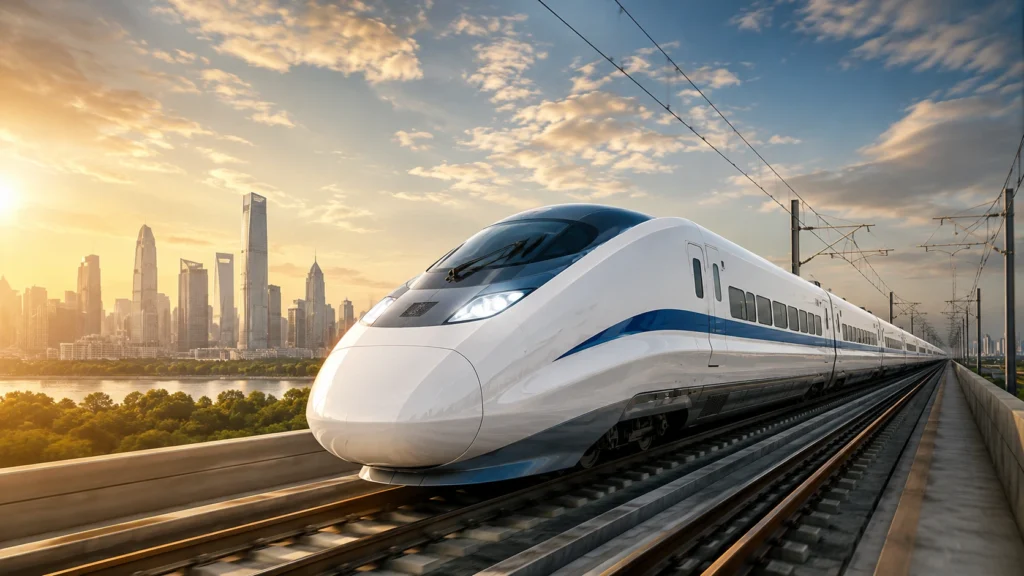
The Mumbai–Ahmedabad Bullet Train project is a major symbol of the India-Japan strategic partnership. It is being built with Japanese Shinkansen technology. This technology is known for speed, safety, and reliability.
Japan has given a large soft loan for the project on highly concessional terms. This is one of the most favorable infrastructure financing deals India has received.
Officials said both sides continue to work closely on technical guidance, training, and high-speed rail expertise.
Early Challenges Slowed the Project
Like many large infrastructure projects, the bullet train corridor faced several early problems. These issues affected the original timeline.
Some of the main issues included:
- Delays in land acquisition across multiple districts.
- Environmental and regulatory approvals.
- Disruptions caused by the COVID-19 pandemic.
- Complex engineering work involving bridges, tunnels, and elevated stretches.
Authorities say many of these problems have now been resolved. This has allowed construction to move faster.
Construction Activity Picks Up
Government agencies say work is now moving ahead in several parts of the corridor. This includes bridges, viaducts, stations, and track foundations.
One of the most difficult parts is the undersea tunnel near Mumbai. It is expected to be a major engineering achievement once finished.
The project is also using precast construction methods and modern engineering tools. These are helping speed up work while keeping safety standards high.
Why the Project Matters
The Mumbai–Ahmedabad High-Speed Rail corridor is expected to cut travel time sharply between the two cities. Once it starts running, the journey should take only a few hours. That is much faster than current rail services.
Experts say the project could bring several long-term benefits, including:
- Faster travel between major cities.
- Stronger business and trade links.
- Growth in tourism.
- Employment during construction and operations.
- Development of advanced railway skills and technology.
The corridor is also expected to bring modern safety systems and operating practices. These could shape future high-speed rail projects in India.
India Reaffirms Its Commitment
After the controversy, Indian officials said the government remains fully committed to completing the project. They said isolated public remarks should not be seen as an official view of the project’s progress.
The MEA also pointed to the wider strength of India-Japan relations. It said cooperation between the two countries goes beyond railways. It includes infrastructure, technology, clean energy, defense, and investment.
Officials said both nations remain focused on the shared goal of delivering India’s first high-speed rail line.
The Road Ahead
Construction is still continuing. The Mumbai–Ahmedabad Bullet Train project remains one of India’s most ambitious infrastructure efforts. The project faced delays in its early stages. But the government says it is now moving at a stronger pace.
India’s response to the former Japanese minister’s remarks shows confidence in the progress already made. It also shows a determination to keep the project on track.
Once completed, the bullet train corridor is expected to become a major milestone for India’s transport sector. It will also stand as a lasting symbol of the India-Japan partnership.
See more: Aamir Khan