


New US Action Deepens Middle East Tensions
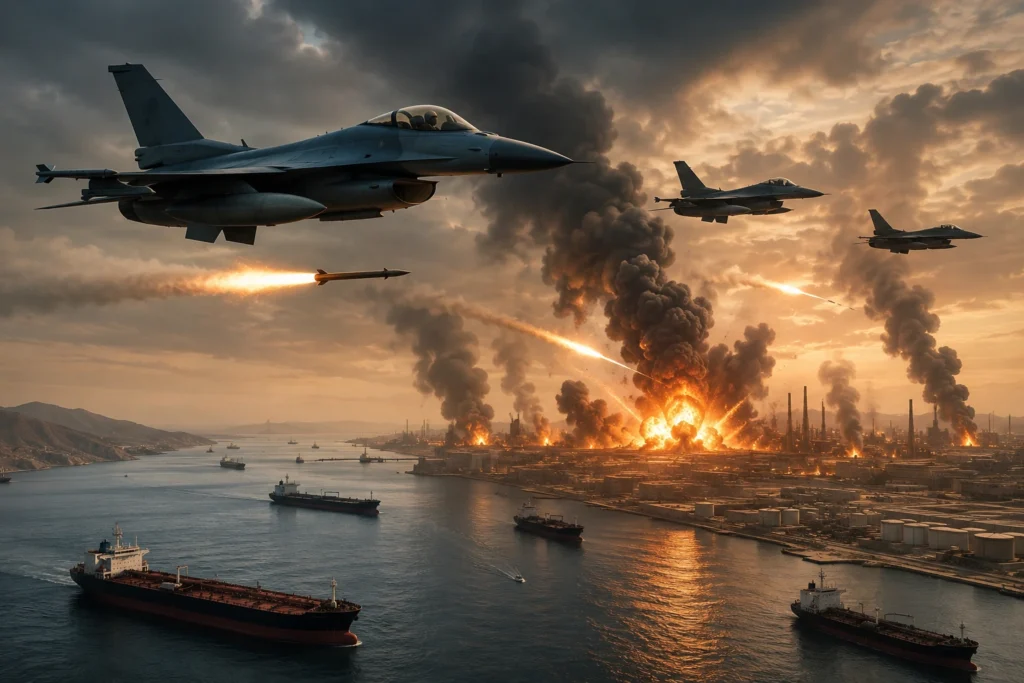
The Middle East has entered another tense phase after the United States launched fresh airstrikes on targets inside Iran. The US strikes came after reported attacks on commercial vessels near the Strait of Hormuz, a critical route for global trade, oil shipments, and energy supplies. The Iran strikes have intensified fears of escalation, and the latest US action has raised concerns about a wider regional war.
The move has increased pressure across the Middle East, where governments are watching the Iran conflict closely. Further escalation could affect regional security, oil supplies, shipping routes, and financial markets. The Strait of Hormuz remains at the center of the crisis, and the US-Iran confrontation is now shaping global attention.
US Says the Strikes Were Intended to Protect Shipping
American defense officials said the strikes hit military sites linked to recent attacks on ships in the Strait of Hormuz. The reported targets included missile positions, naval assets, radar systems, and command centers. According to Washington, the US strikes were aimed at protecting commercial vessels and restoring security in the Strait of Hormuz.
Washington said the operation was meant to reduce Iran’s ability to threaten merchant shipping and disrupt global trade. Officials said it was a defensive response to protect freedom of navigation, not the start of a wider war. Still, the US airstrikes on Iran have added to fears of a broader Middle East conflict and more attacks on shipping.
Blasts Reported in Several Areas
Residents in several Iranian cities reported loud explosions as military sites were hit. Images and videos shared online showed smoke rising from multiple locations, though not all of the footage has been verified. The Iran airstrikes reportedly struck military facilities tied to missile and naval operations.
Damage assessments are still being compiled. Defense analysts say the US strikes appear to have targeted military capabilities rather than civilian infrastructure. Even so, the latest attacks on Iran have deepened tensions in the Middle East and raised questions about the next phase of the US-Iran conflict.
Iran Denounces the Airstrikes
Iran strongly condemned the US operation. It called the strikes a violation of international law and an attack on its sovereignty. Senior Iranian officials said the country would respond at a time and place of its choosing, signaling that the Iran-US confrontation may continue.
Analysts warn that any retaliation could further destabilize the Gulf and widen the regional war risk. Several countries in the region host US forces, and naval patrols are already on high alert. The Strait of Hormuz, commercial shipping, and regional security remain under intense pressure as the Iran crisis escalates.
Why the Strait of Hormuz Is So Important
The Strait of Hormuz is one of the world’s most important waterways. About one-fifth of global oil shipments pass through it each day. It connects Gulf producers with markets around the world, making the Strait of Hormuz vital for oil supplies, energy supplies, and global trade.
Even a short disruption can affect energy supplies, shipping, and fuel prices. That is why any attack near the Strait of Hormuz draws immediate attention from governments, shipping companies, and energy markets. The latest attacks on commercial vessels have once again shown how quickly the Strait of Hormuz crisis can affect the world economy.
After the latest incidents, several shipping companies have reportedly tightened security. Naval forces in the region remain on alert, and the Strait of Hormuz continues to be one of the most closely watched flashpoints in the Middle East.
Oil Prices Move Higher
Financial markets reacted quickly to the renewed tension. Global crude prices rose as traders weighed the risk of supply disruptions if the conflict worsens. The US strikes on Iran and the attacks on shipping in the Strait of Hormuz have both contributed to the rise in oil prices.
Energy experts say prolonged unrest in the Gulf could raise transport costs and add pressure to inflation. It could also hurt industries that depend on imported fuel. If the Strait of Hormuz remains unstable, oil prices, energy supplies, and global trade could all face further disruption.
Diplomacy Faces a Fresh Challenge
The latest military exchange has made diplomacy between Washington and Tehran even harder. Analysts say both sides now face a choice between escalation and negotiations. The US-Iran conflict has complicated efforts to reduce tensions in the Middle East and avoid a wider regional war.
Several governments have urged restraint. They warn that a miscalculation could pull in more regional powers and make the crisis harder to contain. With the Strait of Hormuz under pressure and Iran threatening retaliation, diplomacy now faces one of its toughest tests.
World Leaders Keep a Close Watch
The latest developments have again placed the Middle East at the center of global concern. International organizations are monitoring the situation closely as worries grow over shipping routes, energy markets, and the possibility of a wider regional war. The US strikes, Iran’s response, and the Strait of Hormuz attacks have all increased the sense of urgency.
The full impact of the strikes is still unclear. Experts say the next few days will be critical in deciding whether the crisis cools or expands into a wider regional conflict. For now, the US-Iran standoff, the Strait of Hormuz, and the security of commercial vessels remain the key issues shaping the Middle East crisis.
SEE MORE: Delhi-NCR Heavy Rain Alert: Residents Advised to Stay Indoors