

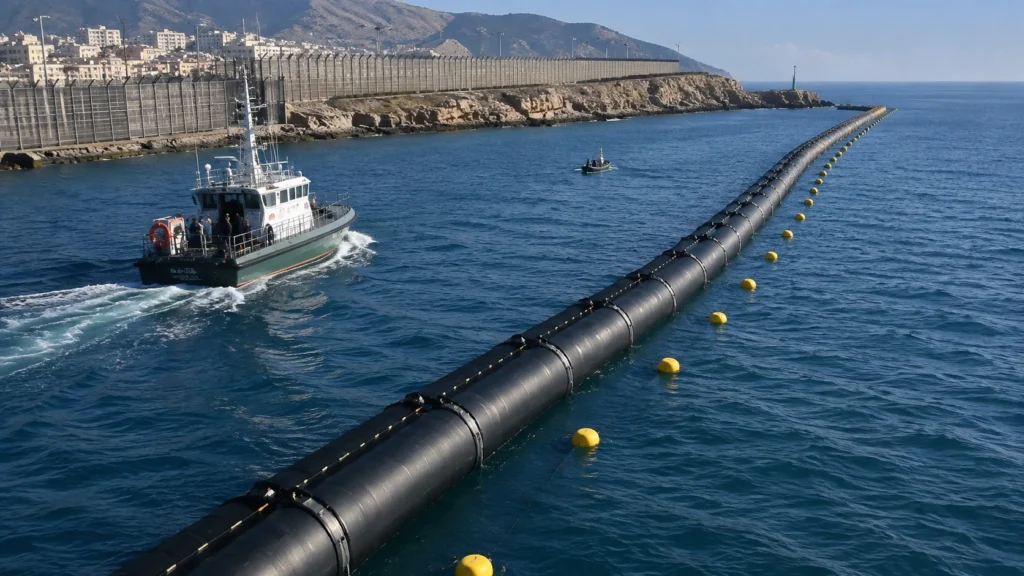

Spain has tightened security after a deadly migrant crisis in Ceuta. The government has installed a floating sea barrier to stop dangerous crossings from Morocco. The move comes after dozens of migrants died while trying to reach European territory.
The tragedy has once again raised questions about border security and migration in Europe.
Why Ceuta Is Important
Ceuta is a Spanish territory on the northern coast of Africa. It shares a border with Morocco. Since it is part of Spain, it is also part of the European Union.
For many migrants, Ceuta is one of the shortest routes into Europe. Every year, thousands try to enter the city by land or sea.
What Happened?
A huge number of migrants tried to enter Ceuta within a short time. Some crossed through the sea. Others headed for the land border.
The sudden rush overwhelmed rescue teams and security forces. At least 67 people lost their lives during the crossing. Many others were injured.
Spanish officials said human traffickers spread false information. They claimed the border was easy to cross. This encouraged thousands of people to attempt the journey at the same time.
Spain’s New Security Measure
After the incident, Spain installed a floating sea barrier near Ceuta’s coast.
The barrier floats on the water. It is designed to stop risky sea crossings. It also allows patrol boats to move freely.
The government says the goal is to save lives and improve border security.
More police officers and coast guard teams have also been deployed in the area.
Pressure on Ceuta
The sudden arrival of migrants created a huge challenge for local authorities.
Shelters became overcrowded. Hospitals treated injured migrants. Emergency workers worked around the clock.
Later, many migrants returned to Morocco or were sent back under existing agreements. This reduced pressure on the city.
Europe Is Watching
The crisis has caught the attention of the European Union.
EU leaders are expected to discuss stronger border management. They also want better cooperation against human trafficking networks.
Many countries believe migration is a shared European issue. They say no single country can solve it alone.
Humanitarian Concerns
Human rights groups say stronger borders are not enough.
Many migrants leave their homes because of poverty, conflict, unemployment, or political instability.
Aid organizations are asking European countries to create safer legal routes for migration. They also want better rescue efforts to prevent more deaths.
What Happens Next?
Spain says the new sea barrier will help stop dangerous crossings. Officials believe it will also reduce the influence of smuggling gangs.
However, experts say the migration crisis needs long-term solutions. They believe countries must work together to address the root causes of migration.
The Ceuta tragedy is a reminder that migration remains one of Europe’s biggest challenges. Protecting borders while saving lives will continue to be a difficult task for governments across the region.