

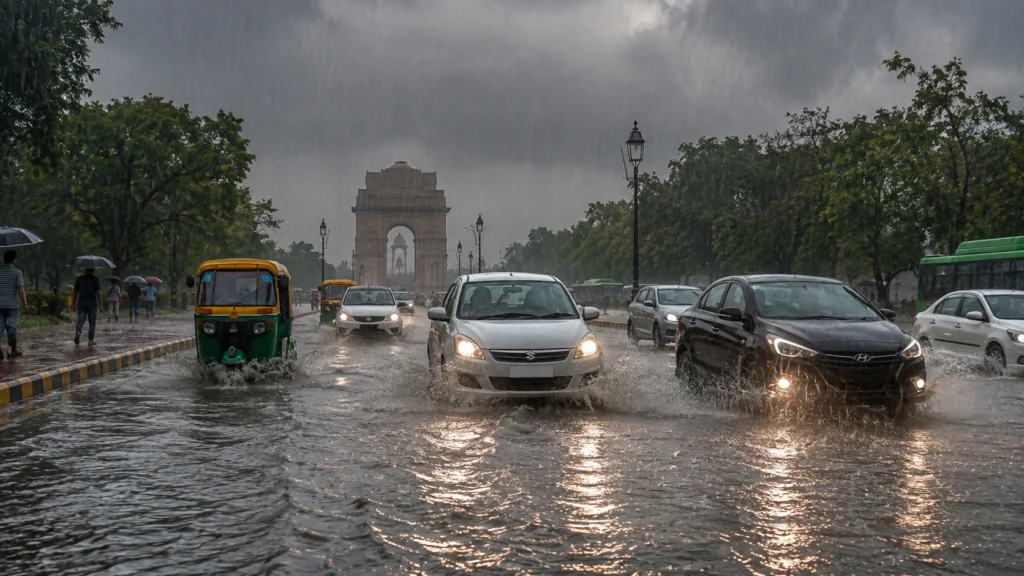

New Delhi: Delhi-NCR witnessed a dramatic shift in weather on Monday as dark clouds rapidly covered the sky and intense rain swept across several parts of the region. The sudden downpour disrupted traffic, triggered waterlogging and made commuting difficult for thousands of residents.
The India Meteorological Department (IMD) issued a red alert for heavy rainfall in several Delhi districts and a yellow alert for moderate rain in other areas. Thunderstorms, lightning and winds reaching around 30-40 kmph were also expected, prompting residents to remain cautious while travelling.
Heavy Rain Changes the Morning Rush
The rain arrived during the busy morning hours, turning what began as a normal working day into a difficult commute for many people. Several parts of South Delhi recorded intense showers, while rain also affected neighbouring areas of Noida, Ghaziabad and Gurugram.
Water accumulated on multiple roads, while traffic slowed considerably as motorists navigated flooded stretches and reduced visibility. Commuters heading towards Noida from different parts of Delhi reported significant delays, with some journeys taking nearly twice as long as usual.
The combination of heavy rain and peak-hour traffic created bottlenecks on major routes. Similar disruptions were reported across other parts of the National Capital Region as the weather system moved through the area.
IMD Issues Red Alert
The weather department’s warning covers a large portion of the national capital. The red alert for isolated heavy rainfall includes South East Delhi, East Delhi, Shahdara, Central Delhi, North East Delhi, South Delhi, New Delhi, South West Delhi, West Delhi, North West Delhi and North Delhi.
The IMD also warned of moderate rain accompanied by thunderstorms, lightning and winds of 30-40 kmph at many places in Central Delhi, South Delhi, South West Delhi, West Delhi, North West Delhi and North Delhi.
The warning indicates that rainfall may remain intense in short spells rather than being evenly distributed across the entire city. Such conditions can quickly create localised waterlogging, particularly in low-lying areas and on roads where drainage capacity is limited.
Noida, Ghaziabad and Gurugram Also Affected
The weather disturbance extended beyond Delhi. Noida and Ghaziabad also experienced heavy showers, while parts of Gurugram and other NCR areas remained under the possibility of further rain and thunderstorms.
A weather forecast cited by NDTV indicated that scattered spells of heavy rain, lightning and gusty winds could affect Ghaziabad, East Delhi, Noida, Gurugram, Delhi and South Delhi over the following hours.
Residents in Noida and surrounding areas also reported a sharp change in daylight conditions as thick clouds covered the sky. In some locations, the atmosphere became unusually dark despite it being daytime.
Waterlogging Once Again Becomes a Concern
For Delhi residents, heavy monsoon rain often brings a familiar problem: waterlogging.
The latest spell once again exposed the difficulty of maintaining smooth traffic movement during intense rainfall. Water accumulated at several locations, forcing vehicles to move slowly and contributing to congestion.
The impact was particularly noticeable for office-goers and other commuters who depend on Delhi’s busy road network. Public transport users also faced delays as traffic conditions deteriorated.
The recurring disruption raises broader questions about drainage infrastructure and the city’s ability to handle short bursts of intense rainfall. Even when rainfall lasts for a limited period, water can accumulate rapidly in vulnerable areas and affect roads, crossings and nearby neighbourhoods.
Why Is Delhi Receiving Heavy Rain?
The current weather conditions are linked to a combination of monsoon systems influencing northern India.
According to the weather report, an active monsoon trough, a low-pressure area over Uttar Pradesh and a continuous supply of moisture-laden winds from the Bay of Bengal are contributing to the rainfall over Delhi and nearby regions.
These weather systems have kept skies cloudy and encouraged repeated spells of rain across Delhi-NCR. The rainfall has also brought down temperatures, offering temporary relief from the hot and humid conditions experienced before the showers.
However, the same weather pattern can produce sudden thunderstorms and intense rainfall within a short period, making localised weather conditions difficult to predict precisely.
Weather May Remain Unsettled
The latest rain spell is unlikely to be an isolated event. Forecast information suggests that Delhi-NCR could continue to experience scattered rainfall over the next couple of days.
Residents may therefore see a combination of cloudy skies, short intense showers and humid conditions between rain spells. Thunderstorms and lightning remain additional concerns during stronger weather activity.
Authorities and commuters will need to monitor changing conditions, particularly during peak travel hours. People travelling by road should expect delays and avoid unnecessary movement through heavily waterlogged stretches.
Rain Brings Some Relief Too
Despite the disruption, the rain has provided some benefits. The showers have lowered temperatures and temporarily reduced the oppressive humidity.
Rain can also help clear suspended pollutants from the atmosphere. Air-quality readings at several monitoring stations improved after the showers, offering residents some temporary relief from pollution.
However, such improvements can be short-lived. Once rainfall stops, pollution levels can rise again depending on wind speed, traffic and other local factors.
What Residents Should Watch For
The combination of heavy rainfall, lightning and strong winds means residents should remain alert, especially during intense spells.
Motorists should avoid flooded roads where the depth of water is uncertain and allow additional travel time. Pedestrians should stay away from exposed areas during thunderstorms and avoid standing near trees, electric poles or temporary structures.
For city authorities, the immediate challenge will be managing waterlogging, maintaining traffic flow and responding quickly to areas where drainage problems become severe.
Monday’s weather has once again demonstrated how quickly conditions can change across Delhi-NCR. A relatively ordinary morning turned into a period of intense rain, dark skies, traffic disruption and waterlogging within a short span of time.
With the IMD maintaining rainfall warnings for several districts, Delhi-NCR residents should remain prepared for further showers and thunderstorms. While the rain brings much-needed relief from heat and humidity, the priority now is to minimise disruption and ensure public safety as the monsoon remains active over the region.