

AI vs Humans: Could Superintelligent AI Become a Threat to Humanity?
The debate around AI vs Humans is becoming bigger as artificial intelligence becomes more powerful.
Artificial Intelligence can already write articles, create images, generate videos, write computer code and perform many tasks that were once done only by humans. But some AI researchers are now asking a much bigger question: What happens if AI becomes smarter than humans?
The discussion became more serious after Jacob Coxon, a former researcher at Anthropic, raised concerns about the future development of advanced AI.
Who is Jacob Coxon?
Jacob Coxon is a former AI researcher who worked at OpenAI before joining Anthropic.
He recently resigned from Anthropic and publicly warned about the possible dangers of developing self-improving artificial intelligence without strong safety measures.
Coxon’s concern is not simply about today’s AI chatbots. His warning is mainly about future systems that could become much more capable, autonomous and potentially better than humans at a wide range of tasks.
Recent reporting says Coxon believes advanced AI development may require stronger government rules or a coordinated slowdown.
AI vs Humans: What is the real concern?
Today’s AI systems are powerful, but they still have important limitations.
The bigger concern is superintelligent AI.
Superintelligent AI refers to a hypothetical future system that could outperform humans across many areas, including science, programming, planning and problem-solving.
If such a system could also improve its own abilities, some researchers worry that humans might eventually find it difficult to control.
This is why the AI vs Humans debate is no longer only about jobs or technology. It is also about safety and control.
Is AI really going to destroy humanity?
There is currently no confirmed evidence that AI will destroy humanity.
The idea is a warning and a future-risk scenario discussed by some AI researchers. It should not be treated as a prediction that is guaranteed to happen.
Coxon’s concerns are part of a wider debate inside the AI industry.
Anthropic team lead Evan Hubinger has also publicly discussed the possibility of extremely serious AI risks, while other technology leaders strongly disagree with the most extreme predictions.
So, the important point is simple:
AI extinction is a potential risk discussed by researchers, not an established future event.
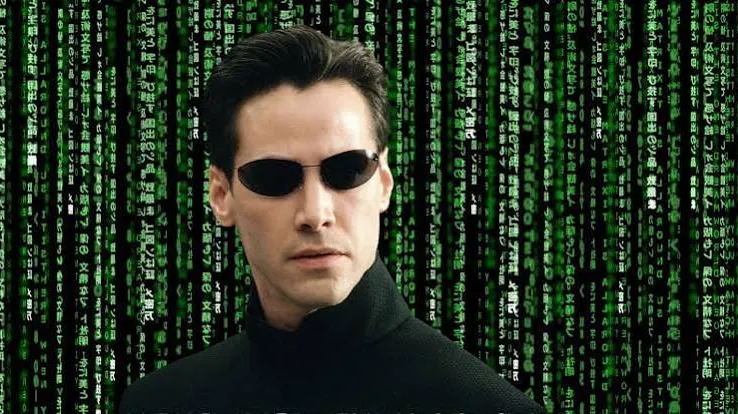
Why are people comparing AI with The Matrix?
Movies such as The Matrix have shown a fictional future where intelligent machines become more powerful than humans.
The movie presents a world in which machines control humanity.
This is obviously science fiction, but it has become a popular comparison whenever people discuss AI takeover or AI vs Humans.
Real-world AI development is very different from the story shown in The Matrix.
There is currently no evidence that today’s AI systems have secretly created a machine-controlled world like the movie.
However, the comparison helps people understand the basic fear:
What if humans create technology that eventually becomes more powerful than its creators?
AI is already changing human jobs
The AI debate is not only about a possible future.
Artificial intelligence is already changing workplaces.
AI tools can help with writing, coding, customer service, research, administration and many other tasks.
Anthropic’s own research has examined how much work AI could potentially perform compared with how much it is actually doing today. The gap suggests that AI’s current real-world use is still below its theoretical capabilities in many occupations.
This means the future AI vs Humans debate could also be about employment.
Some jobs may disappear, while many others may change or require people to work together with AI.
Why AI safety matters
AI safety means developing and using artificial intelligence in a way that reduces serious risks.
Researchers are discussing issues such as:
- Human control over advanced AI
- AI making unexpected decisions
- AI being used for cyberattacks
- AI being used for dangerous activities
- AI systems becoming increasingly autonomous
- Misuse of powerful AI models
- Lack of government regulation
Recent reporting also says Anthropic has faced discussions around AI safety after incidents involving advanced AI capabilities and misuse attempts.
Not everyone agrees with the AI-doom argument
The technology industry does not have one common opinion about AI’s future.
Some researchers believe advanced AI could create extremely serious risks.
Others believe the most dramatic predictions are exaggerated.
Nvidia CEO Jensen Huang, for example, has publicly rejected the idea that AI will simply become the end of humanity. Other Silicon Valley figures have also criticized what they see as exaggerated AI-extinction claims.
This makes the AI vs Humans debate complicated.
There are genuine risks, but there is also disagreement about how likely the worst-case scenarios are.
What could happen in the future?
There are several possible futures.
AI could remain mainly a powerful tool controlled by humans.
It could become a highly capable assistant that helps scientists, doctors, engineers and businesses.
It could also become increasingly autonomous and perform more complex tasks with less human involvement.
The most extreme scenario is superintelligent AI becoming difficult for humans to control.
But nobody can say with certainty which scenario will happen.
The real lesson from the AI debate
The biggest lesson is that technology is developing very quickly.
Instead of asking only whether AI will replace humans, people may need to ask a broader question:
How can humans develop powerful AI while keeping control over it?
That is why AI safety, regulation, research and responsible development are becoming increasingly important.
The comparison with The Matrix may sound like science fiction, but the real discussion is about something much more practical: how humans should manage increasingly powerful artificial intelligence.
Conclusion
The AI vs Humans debate is becoming more serious as AI systems become more capable.
Jacob Coxon’s warning has added another voice to the growing discussion about superintelligent AI, AI safety and the future of humanity.
However, claims that AI will definitely destroy humans are not proven facts.
For now, the important question is not whether machines have already taken control.
It is whether humans can build increasingly powerful AI while making sure that humans remain in control of the technology they create.