
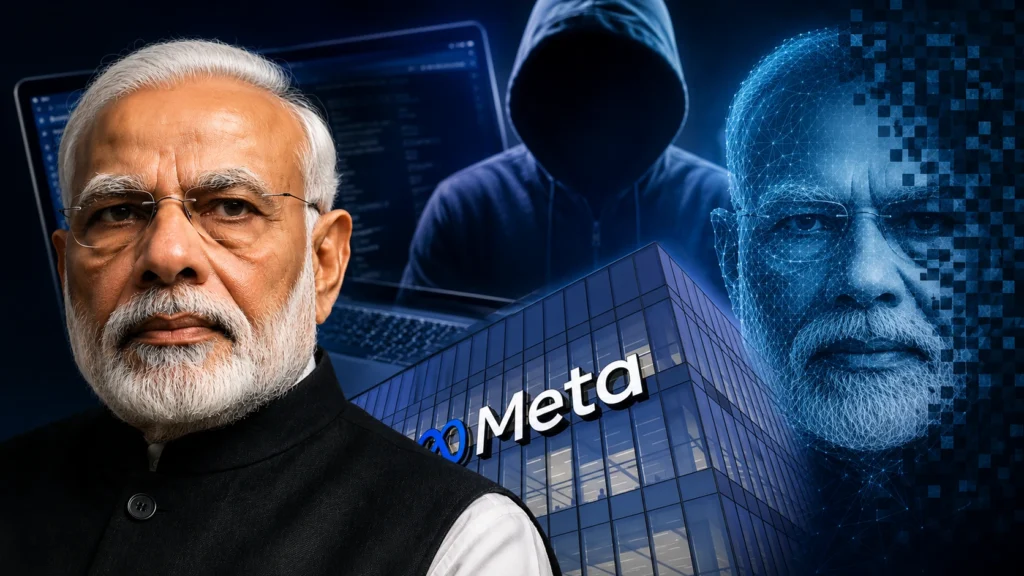

Artificial intelligence is transforming the digital world at an incredible pace, but its misuse is also creating serious legal and ethical challenges. In the latest example, Meta India has come under legal scrutiny after a First Information Report (FIR) was registered over the alleged circulation of AI-generated videos featuring Prime Minister Narendra Modi. The case has once again sparked a nationwide discussion on deepfakes, misinformation, and the responsibility of social media platforms.
The complaint, filed by the Telangana Cyber Crime Police, names Meta India’s local head along with several social media account operators accused of sharing manipulated videos and objectionable content. Investigators are now trying to determine whether the platform responded appropriately after the allegedly misleading videos began spreading online.
Why the FIR Was Registered
According to officials, the disputed videos were allegedly created using artificial intelligence and digital editing techniques to present misleading visuals of Prime Minister Narendra Modi. Authorities believe the content had the potential to confuse viewers and spread misinformation across social media platforms.
Cybercrime investigators claim that such content can influence public opinion, particularly during politically sensitive periods. The case is therefore being examined not only as an issue of misinformation but also as a possible violation of India’s information technology laws.
While the creators of the videos remain under investigation, authorities are also reviewing the role played by the platform where the content was allegedly shared.
Why Meta Is Being Investigated
The FIR has attracted widespread attention because it includes Meta India’s country leadership. Legal experts point out that social media companies are generally considered intermediaries rather than content creators. However, Indian law expects these platforms to remove unlawful content after receiving valid legal requests from authorities.
Investigators are examining whether Meta followed all required procedures once the disputed videos appeared on Facebook and Instagram. At this stage, the registration of an FIR is only the beginning of the legal process and should not be interpreted as proof of wrongdoing.
The investigation will determine whether there was any delay, negligence, or violation of applicable regulations.
AI Deepfakes Becoming a Bigger Threat
The incident reflects a growing global concern over AI-generated deepfake videos. Modern artificial intelligence tools can now create highly realistic images, voices, and videos that closely resemble real people, making fake content increasingly difficult to identify.
Experts warn that these technologies can be misused to spread political propaganda, financial scams, celebrity impersonations, and false information. As AI tools become more accessible, governments around the world are racing to introduce stronger regulations to prevent their misuse.
India has also been working on stricter digital governance policies while encouraging social media companies to improve their systems for identifying manipulated content before it reaches millions of users.
A Sensitive Time for Meta
The FIR comes shortly after another incident involving Meta drew attention in India. Earlier this week, a Facebook post by Prime Minister Narendra Modi was briefly restricted because of what the company later described as a technical error.
Meta restored the content, apologized for the mistake, and reportedly agreed to meet government officials to explain what had happened. The latest legal action has therefore added further pressure on the company, which is already facing increased scrutiny over its content moderation practices.
What Happens Next?
Cybercrime officials are collecting digital evidence, identifying the original source of the videos, and tracing how they spread across different social media accounts. Investigators will also examine communication records, platform responses, and technical data related to the case.
If investigators find evidence of deliberate misinformation or violations of Indian law, additional legal action may follow against those responsible for creating or distributing the videos.
Meta has not issued a detailed public response regarding the FIR so far.
The Larger Issue
Beyond this individual case, the controversy highlights a much bigger challenge for the digital world. Artificial intelligence offers enormous opportunities for innovation, but it also makes it easier to create convincing fake content capable of misleading millions of people within minutes.
Governments, technology companies, and cybersecurity experts are increasingly calling for stronger safeguards, faster content moderation, improved AI detection tools, and greater public awareness about identifying manipulated media.
As deepfake technology continues to evolve, cases like this may become more common unless platforms and regulators develop effective mechanisms to balance innovation with accountability.
See more: Raja Raghuvanshi Murder Case