
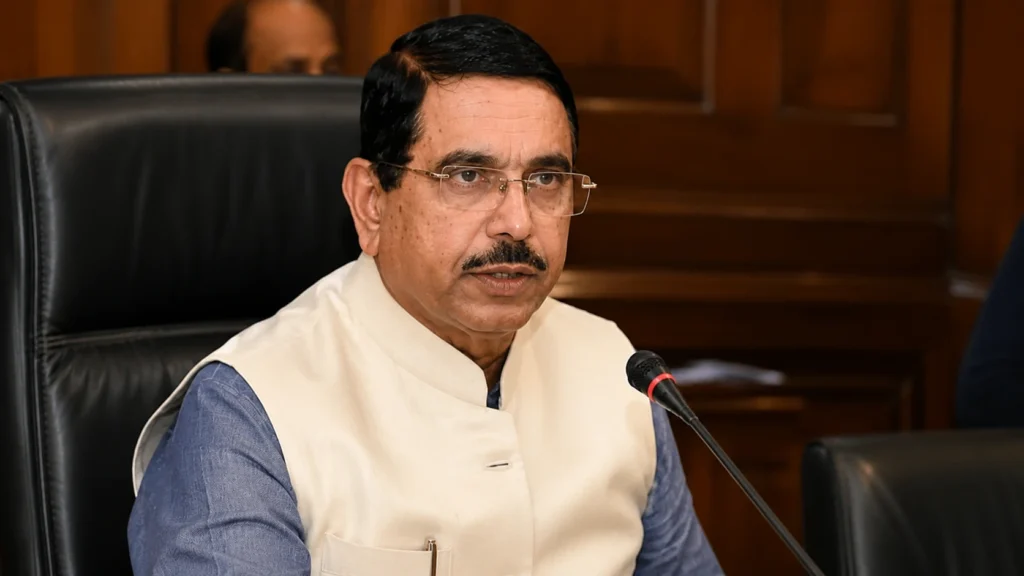

India’s education sector has entered a new chapter. Pralhad Joshi, one of the Bharatiya Janata Party’s (BJP) most experienced leaders, has been appointed as the country’s new Union Education Minister. His appointment comes at a time when the ministry is facing intense public scrutiny over exam-related controversies, paper leak allegations, and growing calls for reforms.
With millions of students, teachers, and parents looking for answers, Joshi now carries the responsibility of rebuilding confidence in India’s education system while steering one of the country’s most important ministries.
A Leadership Change During Challenging Times
The appointment follows the resignation of former Education Minister Dharmendra Pradhan, whose exit came amid widespread protests over examination irregularities. The controversy sparked nationwide debates on the security and transparency of competitive exams, making education one of India’s biggest political and social issues.
Recognizing the need for experienced leadership, the central government entrusted Pralhad Joshi with the Education Ministry, hoping his administrative background will help restore public trust.
Who Is Pralhad Joshi?
Pralhad Joshi is far from a newcomer in Indian politics. A six-time Member of Parliament from Dharwad, Karnataka, he has spent more than two decades in Parliament and has held several key positions in the Union Cabinet.
Over the years, he has managed important ministries including Parliamentary Affairs, Coal, Mines, Consumer Affairs, Food and Public Distribution, and New and Renewable Energy. His ability to handle complex portfolios has earned him the reputation of being one of the BJP’s most dependable administrators.
Known for his calm working style and strong organizational skills, Joshi has consistently remained an important part of Prime Minister Narendra Modi’s cabinet.
From Karnataka to the National Stage
Born in Karnataka, Joshi began his public life through grassroots political work before entering Parliament in 2004. Since then, he has successfully retained his Lok Sabha seat multiple times, reflecting his strong support in the Dharwad constituency.
Throughout his political journey, he has preferred a low-profile approach, focusing more on governance than political headlines. Colleagues often describe him as a disciplined leader who believes in administrative efficiency and consensus-building.
The Massive Responsibility Ahead
Taking charge of the Education Ministry is perhaps one of the toughest assignments of Joshi’s political career.
The ministry oversees India’s vast education network—from school education and higher education to prestigious entrance examinations such as NEET, JEE, CUET, and several national recruitment tests. Every decision directly affects millions of students across the country.
Among his biggest immediate challenges are:
- Restoring confidence in competitive examinations.
- Strengthening measures to prevent paper leaks.
- Improving transparency in recruitment and entrance tests.
- Speeding up implementation of the National Education Policy (NEP).
- Expanding access to quality education in rural and urban areas.
- Enhancing the use of technology in examinations and learning.
Education experts believe these reforms will be closely watched by students, parents, educational institutions, and opposition parties alike.
His First Message After Taking Charge
Soon after assuming office, Pralhad Joshi acknowledged that education is a new portfolio for him. Instead of making immediate promises, he said his first priority would be understanding the ministry’s ongoing work before taking major policy decisions.
His measured response reflects a cautious approach, suggesting that he intends to review existing systems thoroughly before introducing changes.
Why His Appointment Matters
Unlike many first-time ministers, Joshi brings years of experience in handling ministries that required coordination across states, departments, and government agencies.
Supporters believe this administrative experience could prove valuable in addressing issues that go beyond academics, including examination security, institutional reforms, digital education, and governance.
At the same time, expectations are extremely high. Students want transparent examinations, universities seek policy stability, and parents expect stronger safeguards against future irregularities.
What Could Change Under His Leadership?
While the government has not yet announced a detailed roadmap, education analysts expect the ministry to prioritize reforms aimed at making national examinations more secure and transparent.
Possible focus areas include stricter monitoring of examination agencies, stronger digital security systems, faster investigation of malpractice, and better coordination between central and state authorities.
The ministry is also expected to continue implementing the National Education Policy while addressing challenges in higher education, teacher training, and skill development.
The Road Ahead
Pralhad Joshi steps into the Education Ministry at one of its most sensitive moments in recent years. The decisions he makes in the coming months will shape the future of millions of students and influence public confidence in India’s education system.
His long administrative experience gives him a strong foundation, but the real test lies ahead. Students are demanding fairness, parents are seeking accountability, and educational institutions are looking for stability.
Whether Pralhad Joshi succeeds in restoring trust and delivering meaningful reforms will define not only his tenure but also the future direction of India’s education system. With expectations higher than ever, the nation will be closely watching every step of his leadership.
See more: Seattle Food Festival Horror