

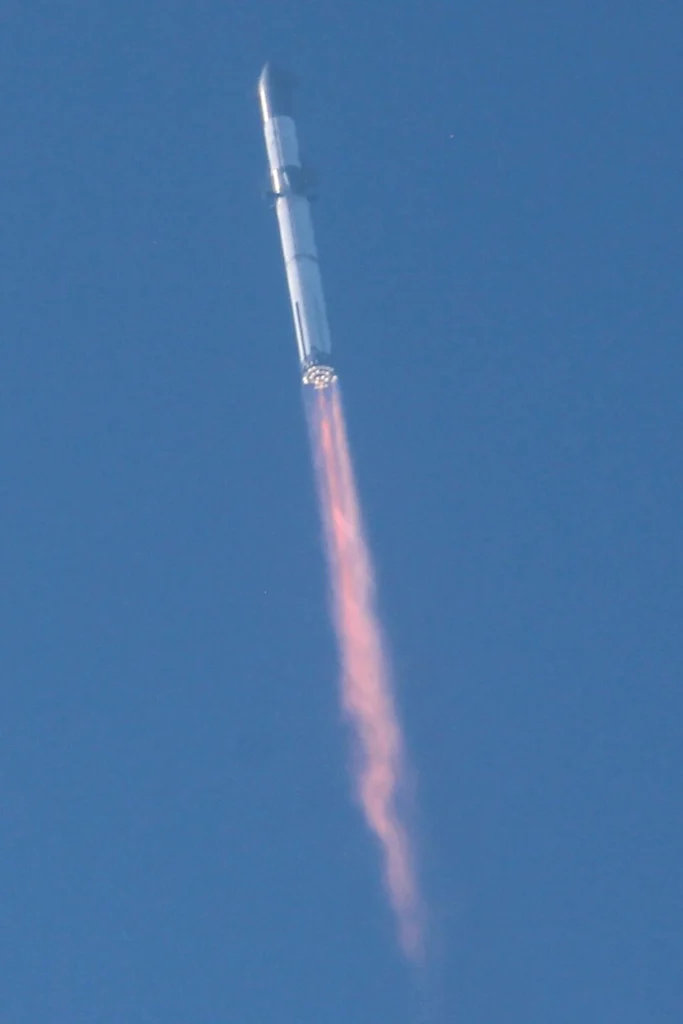

SpaceX Starship Reaches Orbit for First Time, Mission Ends Early
SpaceX’s Starship reached Earth’s orbit for the first time during its 14th test flight on September 28. The giant spacecraft also deployed 26 next-generation Starlink V3 satellites during the mission. The launch took place from SpaceX’s Starbase facility in Texas and marked a major milestone for the company’s reusable rocket programme.
SpaceX Starship reaches orbit for the first time
The flight began as planned, but an engine problem soon created uncertainty. One of Starship’s engines shut down during the ascent after the spacecraft separated from the Super Heavy booster. Mission controllers initially indicated that the vehicle might not continue towards orbit. Engineers later confirmed that Starship could safely proceed using its remaining engines, allowing the spacecraft to complete its orbital burn.
Starship then reached orbit and began deploying its payload. The spacecraft released all 26 Starlink V3 satellites at an altitude of roughly 269 km. The satellites are designed to provide much higher data capacity than earlier Starlink versions. Their deployment also made the flight the first Starship mission to carry an operational satellite payload into orbit.
Starship mission ends earlier than planned
SpaceX had planned a flight lasting around 10 hours, including several trips around Earth. However, the engine issue led controllers to shorten the mission. Starship remained in space for about three hours before beginning its return to Earth.
The spacecraft re-entered the atmosphere and completed a controlled splashdown in the Pacific Ocean north of Hawaii. The vehicle later tipped over and caught fire after reaching the water. SpaceX had not planned to recover the spacecraft from the ocean during this test.
Starship test marks a new milestone for SpaceX
The orbital achievement is significant because none of Starship’s previous 13 full-scale test flights had reached orbit. The latest mission showed that the spacecraft could reach orbit and deploy satellites even after losing one engine during the flight.
SpaceX is developing Starship for future high-capacity satellite launches and deep-space missions. The vehicle is also central to NASA’s plans for future Artemis lunar missions. The latest flight therefore provides important data for the next stages of Starship’s development, while also highlighting the technical challenges that remain before the spacecraft can support routine missions.
Also Read: Red Bull Energy Drink Label: Delhi HC Quashes FSSAI Order