
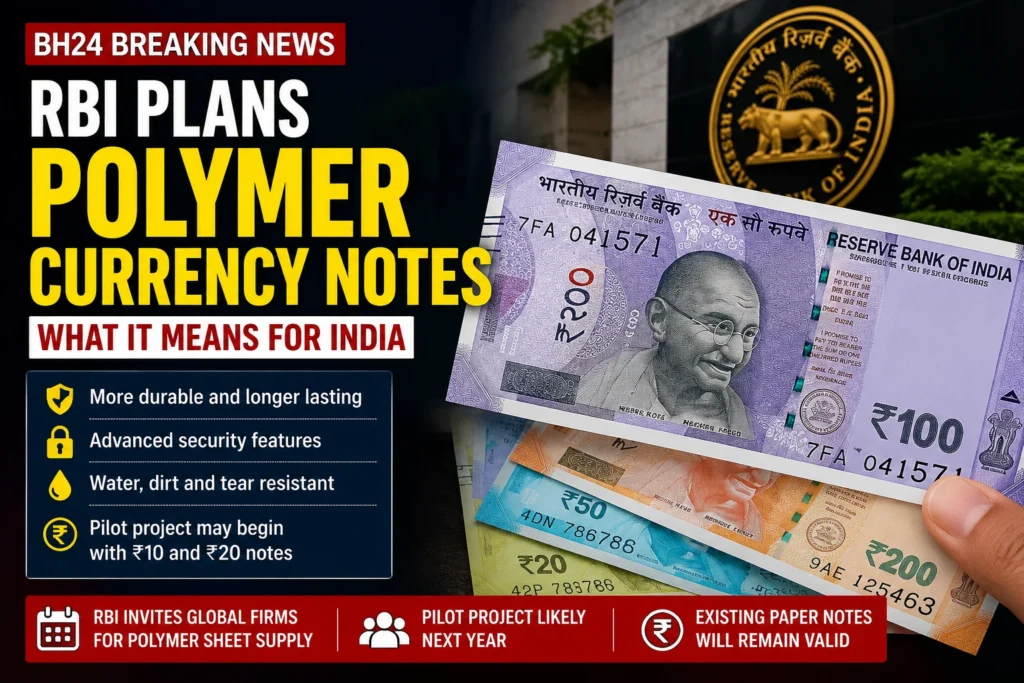

RBI polymer currency notes are back in the spotlight. The Reserve Bank of India (RBI) has taken a major step towards introducing plastic banknotes. The move could modernise India’s currency system and improve note security.
The RBI’s currency printing subsidiary has invited global companies to supply security-grade polymer sheets. These sheets will be used to print the new banknotes if the project moves ahead.
What Are Polymer Currency Notes?
Polymer notes are made from a thin plastic material instead of cotton-based paper.
More than 50 countries, including Australia, Canada, and the United Kingdom, already use them. They last much longer and are harder to counterfeit.
Why Does RBI Want Polymer Notes?
The RBI is exploring polymer notes for several reasons.
They last much longer than paper notes.
They resist water, dirt, and tearing.
They include advanced security features.
They reduce replacement costs over time.
They make counterfeiting more difficult.
Which Notes Could Arrive First?
According to reports, the RBI may begin with a pilot project using ₹10 and ₹20 notes. These denominations wear out quickly because people use them frequently.
A wider rollout will depend on the success of the pilot. If everything goes well, larger-scale circulation could begin later.
Will Existing Notes Become Invalid?
No.
There is no plan to withdraw current paper currency because of the polymer project. Paper and polymer notes are expected to circulate together if the rollout begins.
This is not demonetisation. Existing notes will continue to remain legal tender unless the RBI announces otherwise.
How Far Has the Project Reached?
The RBI has not announced a launch date.
However, inviting global suppliers marks one of the biggest steps taken so far. Interested companies must meet strict security standards before supplying polymer material for Indian banknotes.
What Happens Next?
The RBI will evaluate the bids and test the polymer material.
If the pilot succeeds, India could gradually introduce polymer notes in phases. Officials will study public feedback, durability, and security before expanding the programme.
Bottom Line
India is moving closer to a new generation of banknotes. Polymer currency promises better durability, stronger security, and lower long-term costs. However, the proposal is still under evaluation. For now, existing paper notes remain valid, and any nationwide rollout will happen only after successful trials.
Also Read: Sonam Wangchuk Hospitalised After 21-Day Hunger Strike