

Delhi Pollution Worsens as Smoke from Pakistan‘s Punjab Adds to Toxic Air
Delhi’s air pollution is getting worse with every passing day. The national capital has entered the ‘Very Poor’ air quality category, and smoke from farm fires in neighbouring regions is adding to the problem.
This time, the concern is not limited to pollution from Indian states. Smoke from stubble burning in Pakistan’s Punjab province is also being carried towards Delhi by north-westerly winds.
According to reports, Delhi recorded an Air Quality Index (AQI) of 324 on November 2. This was the first ‘Very Poor’ reading of the season.
Smoke from Pakistan Reaches Delhi
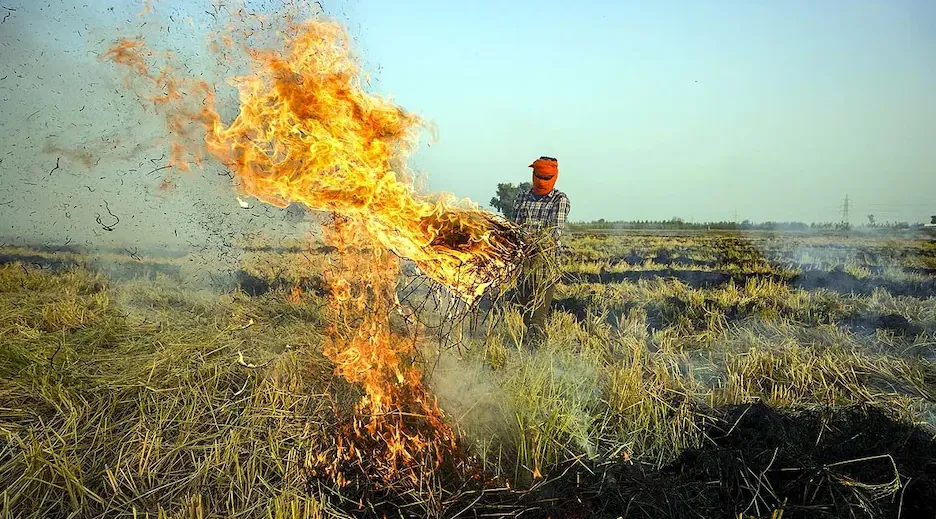
Stubble burning is a major concern during the winter months. Farmers burn leftover crop residue after harvesting their crops, producing smoke that can travel long distances.
This year, farm fires have been reported in Punjab and Haryana in India, as well as across the border in Pakistan’s Punjab province.
North-westerly winds are carrying smoke from these areas towards Delhi-NCR. This is adding to the pollution already present in the city.
Satellite images have also shown a large number of active farm fires near Pakistan’s Punjab region.
Why Is Delhi’s Air Quality Getting Worse?
There are several reasons behind the rising pollution levels.
First, smoke from stubble burning is adding fine particles to the air. Second, vehicle emissions and construction activities are contributing to pollution.
Weather conditions are making the situation worse. Low wind speeds and unfavourable weather are preventing polluted air from spreading quickly.
As a result, pollution is getting trapped over the region, making the air quality worse.
AQI Reaches the Very Poor Category
Delhi’s AQI increased sharply over a few days.
The city’s AQI was 117 on October 31, increased to 261 on November 1 and reached 324 on November 2.
An AQI between 301 and 400 falls under the ‘Very Poor’ category.
According to forecasts, air quality could remain very poor until November 5. The contribution of stubble-burning smoke to Delhi’s PM2.5 pollution was estimated at around 8.5% on November 2 and could rise to 22% by November 5.
Government Takes Action Under GRAP Stage 2
As pollution levels increased, the Commission for Air Quality Management (CAQM) introduced Stage 2 of the Graded Response Action Plan (GRAP) across Delhi-NCR.
The measures include increasing road cleaning and water sprinkling, checking construction sites, increasing parking charges and encouraging people to use public transport.
Delhi Metro has also announced additional weekday train services to make travel easier for commuters.
Authorities are taking these steps to control pollution and prevent air quality from becoming worse.
What Happens Next?
The coming days will be important for Delhi-NCR. Weather conditions, wind direction and the number of farm fires will influence how pollution levels change.
Experts have warned that smoke from stubble burning could increase its contribution to Delhi’s pollution.
For now, the city continues to face serious air quality concerns, and authorities are working to control the situation.