

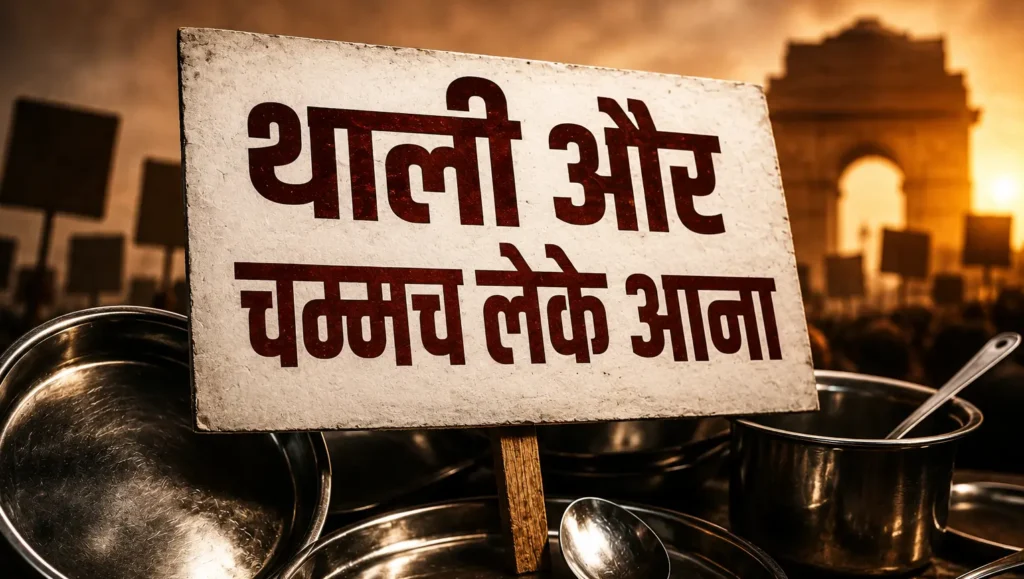

The CJP Protest Delhi is set to draw fresh attention on Saturday as the Cockroach Janta Party prepares its second major demonstration at Jantar Mantar. The protest will begin at 1 pm. Abhijeet Dipke has placed the resignation of Union Education Minister Dharmendra Pradhan at the center of the campaign, while Delhi Police has stepped up security across the city ahead of the gathering.
Why the protest is gaining traction
The latest round of mobilisation did not begin on the street. It started online and then moved into public view. CJP has used anger over the NEET-UG paper leak, exam concerns, and student distress to build a wider protest movement.
The group wants to reach more than its core supporters. It is now trying to bring students, parents, teachers, artists, and activists into the campaign.
This matters because the protest has moved beyond social media. The group is no longer only posting sharp messages online. It is now asking people to come to Delhi, gather at Jantar Mantar, and keep pressure on the government in person.
Key demands driving the movement include:
- Dharmendra Pradhan’s resignation
- Accountability for alleged exam irregularities
- Compensation for affected families
- Structural reform in the education system
CJP is also trying to frame the issue as a larger crisis. It is not presenting this as only one exam scandal. Instead, it is linking the row to public trust, education, and youth anxiety.
For the organisers, this protest is also a test. A second high-profile rally will show whether the campaign can stay active beyond one burst of anger.
Security at the protest in Delhi
Delhi Police has treated the gathering as an important law-and-order event. Officials say the protest has permission, will begin at 1 pm, and is expected to draw supporters from Delhi and nearby states.
To manage the crowd, police have put several measures in place. These include CCTV cameras, videographers, barricades, and reserve forces.
The security response shows how seriously the authorities are taking the protest. Around 270 body-worn cameras will be used by personnel at the site. Senior officers will also oversee the arrangements from the ground.
Police have also increased checks at transport hubs and border points.
Main security steps reported so far:
- CCTV surveillance around Jantar Mantar
- Body-worn cameras for deployed personnel
- Videographers at the protest site
- Barricades on nearby roads
- Senior officers and reserve forces on the ground
The aim is to keep the protest peaceful while recording any escalation. Police also want to prevent the gathering from spilling into nearby central Delhi roads.
The overall approach suggests one clear goal: allow the protest to remain visible, but keep it controlled.
What the CJP protest in Delhi is asking for
Dipke has sharpened his criticism of the Centre in the run-up to the protest. In recent coverage, he criticised the reported temporary block on Telegram before the NEET retest. He said that blocking a platform does not solve the deeper problem.
He has also written to Prime Minister Narendra Modi. In that letter, he asked for ₹1 crore in compensation for the families of students who died by suicide during the exam controversy.
Supporters have also been asked to bring plates and spoons to the protest. The idea recalls the 2020 utensil-banging campaign and gives the demonstration a strong visual identity.
The symbolism is simple and direct. It connects the current protest to a memory that many people still remember.
Dipke’s message has focused on three points:
- The government must take responsibility
- Affected families need immediate financial relief
- The education system needs real reform, not cosmetic fixes
Sonam Wangchuk’s expected presence adds more attention to the protest. He had attended the earlier rally too. His return suggests that the movement wants to stay in the national conversation.
The focus on one minister has also made the protest easier to understand. By linking exam irregularities, student anxiety, and reform demands to one clear target, the campaign has created a sharper political message.
Why the CJP protest in Delhi matters before NEET retest
The timing of the CJP Protest Delhi gives it added weight. The NEET-UG retest is scheduled for 21 June. That means the Jantar Mantar gathering arrives at a sensitive moment in the controversy.
Any large crowd, strong slogan, or public criticism now can shape the atmosphere around the exam.
Dipke’s allegations about student suicides have also drawn attention. Those claims are emotionally powerful, but they remain allegations in the current reporting. They should be treated carefully until independently verified.
Even so, the issue has already moved beyond a technical exam dispute. It is now part of a wider debate on student safety, public confidence, and ministerial accountability.
The protest is more than a single afternoon event. It is an attempt to turn anger into pressure, and pressure into political consequence.
What to watch next:
- How many supporters reach Jantar Mantar
- Whether the protest stays peaceful
- Whether the Centre or Education Ministry responds
- Whether CJP turns this into a longer campaign after the retest
For now, the verified picture is clear. The protest is on, the security ring is tight, the resignation demand remains central, and the NEET controversy is still driving the story. The CJP Protest Delhi has become one of the clearest street-level expressions of that anger.
Read Also: Rahul Gandhi Birthday
Follow Us on Instagram: bh24newsweb